a Taj MuttHall Dog Diary: history of California
Showing posts with label history of California. Show all posts

Thursday, August 26, 2021

Downsizing: Two Stories

SUMMARY: It's hard. But not as hard as it could be.

I've known about Manzanar for decades. Still haven't been (twice due to weather issues on my route--once, snow; once, heat--to give you a rough idea about the weather extremes residents there would've experienced).

Currently I'm trying to downsize my possessions before moving, hopefully to a smaller house. My stated goal is to get rid of half of everything. I struggle daily with which books to keep, which to give away. Or clothing. Or kitchen, cooking, baking items. Or furniture. Or personal mementos of family or trips or experiences. Or photo albums (I have dozens--mine and my parents').  Mentioned to a friend a couple of hours ago how stressful it is, making so many decisions day after day.

And now I just watched this. 

If you have the time, it's beautifully produced, sensitive,
upbeat in a way, understanding of how they lived
and made lives as best they could and  respectful of the challenges. 
While being reminded of what they--and we as a country--lost.
If you can't see the video here, then: https://www.youtube.com/watch?v=araQR50tVjI


The comparison to my downsize challenges is agonizing. Two suitcases.

Wednesday, December 16, 2020

Ecology: Its Price (Again)

SUMMARY: From spewing sewage and garbage to fouled water to colored toilet paper and Bald Eagles to speeches to composting and cleanup and dog agility.

Earlier posts in a similar vein:


Backfill: My response on a Facebook thread discussing Glass Beach up north from here, near Fort Bragg, where there's almost no glass left of the once profuse garbage dump remnants because people have taken it, and one person's astonishment that people would have dumped their trash into the ocean: 
"so sad.  'It’s ok, let’s pollute the ocean.' It just blows my mind that people in an my day Would think that way." 
I don't know her or her background at all, but I'm grateful that it sparked my brain's sh**load of material on that topic.

Disclaimer: Wrote this on the fly in a comment, haven't edited much at all except adding some links, so sorry for haphazard wandering. No theme statement. No outline. No editing for readability. Just--dumping my truckload of environmental stuff into your ocean.

Yes, sadly, welcome to the 20th century. And--still onward into the 21st. 🙁 Dumping stopped at the Ft. Bragg Glass Beach(es) in the late '60s as I understand it and they started cleaning up dump leftovers (not sure what exactly that entailed). But people's junk STILL has to go somewhere.

Down here in Silicon Valley, the valley and surrounding hills are filled with active "landfills" and also lovely cleaned up, grassy, elevated parks and hills that are former landfills within my lifetime. But residents have spread out enough that trying to find somewhere to dump the trash of the 2 million people in this county is dire--we'll run out of current space eventually, despite all the effort at recycling.

The East River in NYC was still receiving dumped waste and sewer waste into the '90s. Now it's actually swimmable a good portion of the time. The Hudson River (I lived within walking distance of it for several years), which flows to the sea around Liberty Enlightening The World, was notoriously bad and although much has been done to improve it, the residue lingers.

The rivers that caught fire in the late '60s from all the pollution-- much better now.

But the first earth day was only in 1970. Most people didn't think about all of these things much. I did an award-winning speech in a local competition for students early that decade on the topic of "ecology: its price". (I think my focus was more on "ecology: the price of ignoring it!" Also: "ecology" was the term then; not so much "environment".) That was when I thought that I'd never see a live bald eagle here in the mainland U.S. because they'd all be gone because of DDT (Rachel Carson's Silent Spring only came out in the '60s). Now they're nesting in school yards and parks near populations of millions.

That was when I started convincing family and friends not to buy colored TP [that's a fun link! Check it out for the photos anyway] because of the toxic dyes being dumped into waterways (I mean, who'd want white when you could have bright blue to match your decor? -- nowadays, I don't think I ever see colored TP anywhere). That's when we started collecting cans and bottles to take to the very small very local recycling center at the nearby college where we'd have to crush the cans and break the glass before tossing them into the huge separate dumpsters--one for aluminum, one for tin cans & such, one for green glass, one for clear glass, etc.-- to be taken to recycling places. So we went out and bought our own different-colored plastic bins to put our compostables in. (The last of mine just died--have used them only for garden chores since the garbage companies started providing their own containers.)

1994: In the background, our black trash cans. Behind them are a green and a yellow bin (can't see the blue one) that I believe are those that the garbage company eventually provided us, not the ones we bought.


(Plastics weren't A Thing back then--we've really gone backwards since then with plastic use and we're in trouble again if we can't get that under control, and people don't think about how plastics are so much worse than cans and bottles! You undoubtedly are aware of that yourself. It scares me. And it scares me how much it limits my purchases of anything--food or anything else--if I try to avoid plastic) .


When local municipalities started requiring you to put your recyclables into separate containers from the trash for trash collection--so amazing to see that happen!--around here in the late '80s after the passage of AB939 required California municipalities to have a plan to reduce landfill waste (and I know all of this because of my work as a Master Composter--in fact, the MC training program existed because of it and I was in the 2nd-ever class)-- I remember a good friend ranting about how disgusting it was that she had to maintain more than one container for garbage in her yard and that she had to keep the metal and glass garbage out of her kitchen trash or she'd have to handle it all covered with garbage and she was furious for a long time, despite all the data I spewed at her about landfills and all that. (Another example of people who don't care about something or have a strong opinion not being swayed by data.)  [CAN YOU BELIEVE almost that entire paragraph was one sentence?! This is why I should edit my brain dumps.]

Nowadays, around here anyway, you cannot use just any container for trash. They'll collect trash ONLY from the bins that the garbage company provides and ONLY from the recycling bins ditto.  Now we don't have to separate our recyclables into several separate containers--it all goes into one big one for sorting later. So now I use my old wonderful eternally lasting black plastic ones (previous photo) for other stuff.

My containers from the trash collectors:
my neat and tidy giant recycling bin and tiny trash can, and the neighbor's overflowing ones
(garbage company doesn't like that, but they collect 'em anyway)
Does show progress that the recycling bin is so much larger than the landfill bin

Some local cities sort the trash even *after* it has been collected (<- video, kind of cool; I've been on a tour, but note that the huge quantities that they discuss are ONLY for the small city of Sunnyvale pop. 153,000, vs. the total population of the county pop. 1.9 million).

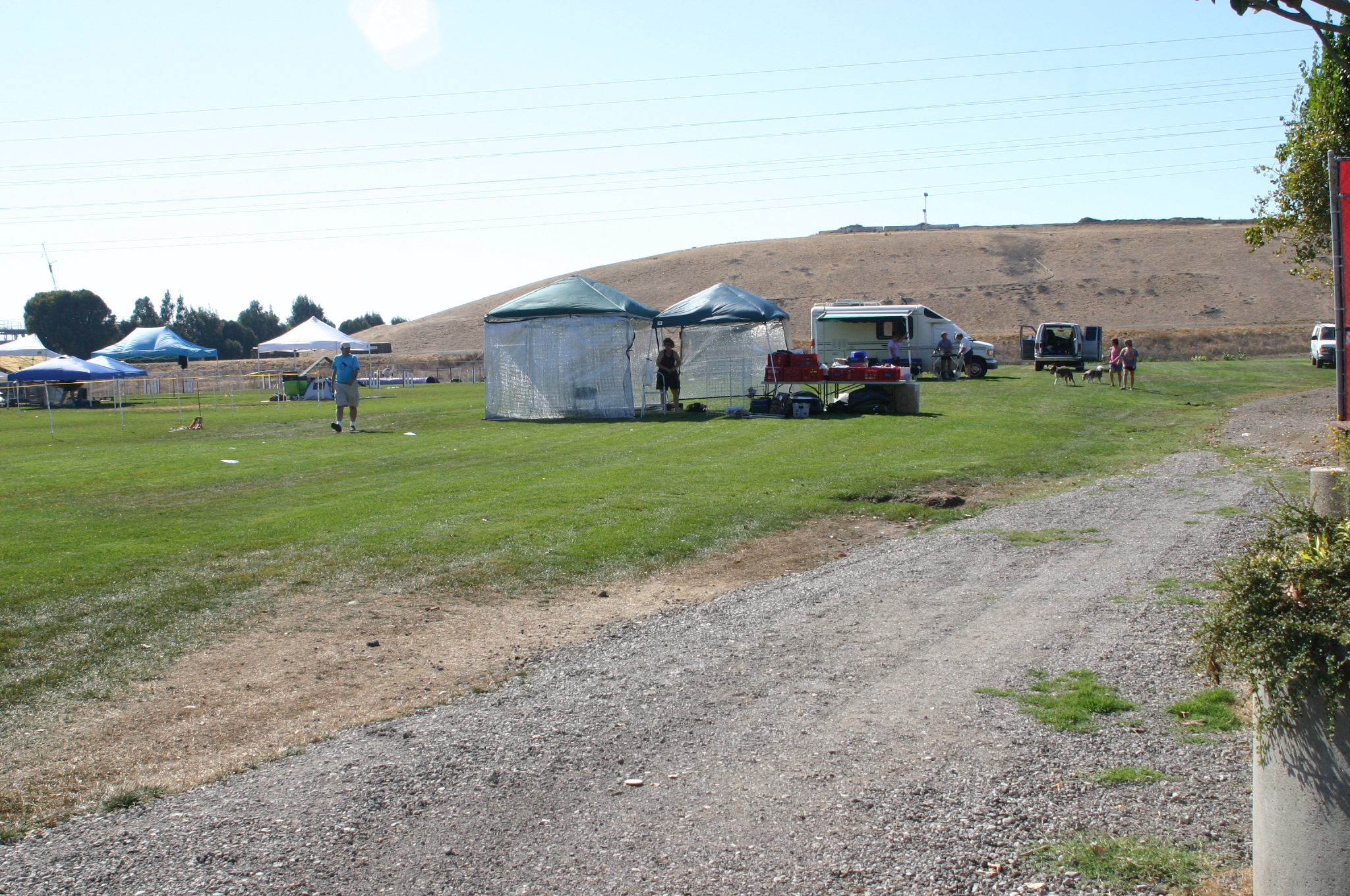
For years, we held agility competitions in the  huge softball fields adjacent to
the old landfill hill that the preceding video shows at about a minute in.


All of this to say-- "pollute" wasn't a big word until well into the 2nd half of the 20th century. People didn't think like that. I don't know how much of that you lived through, but that was the way the world worked for millennia. 🙂 (I haven't lived for millennia, in case you wondered.) And many  people are still thinking like that in many areas (who cheered when Trump backed us out of the Paris Accord?).


Thursday, August 06, 2020

Missing Disney Parks and the Parking Lot In Particular

SUMMARY: I'm an addict... sort of...

Disneyland is my happy place.

Not my only happy place, but pretty much guaranteed to be my happy place when I'm there. Which I try to be, roughly every couple of years.  Except, haven't been since November of 2017, and then I did very little in the parks because we were there for races (5Ks, etc.) and friends.

Looking across the dustpile that would become Disney California Adventure towards the Anaheim Convention Center.

We did Walt Disney World nearly a year ago, but it's not the same: Disneyland is home. The addition of California Adventure in 2001 at first was a disappointment but has gradually improved after the huge Disney Corp filled with some of the most creative people in the planet recognized their design flaw, which probably most of us saw while they were still building it:

Let's build an amusement park about doing fun and famous things in California, and put it in... California! 

Now it's better. With some cool attractions that we always make time to do. 
Clearly *something* will be built in here; hoping it will be cool.

However, to add Disney California Adventure (and Downtown Disney, which is between the parks -- a long pedestrian-only street of shops and restaurants, all of which are pretty good and we have a couple of favorites), they built it atop where the dearly beloved parking lot used to be. The one that was right next to the entrance. Convenient. And shoved all the parking into distant huge and pricey parking garages. I've never parked in one, but friends who drive up to join us sometimes don't get to us for as much as half an hour.

Used to be parking lot.


Today, someone posted in the Facebook Group MiceChat, 

"Does anyone remember [the] old parking lot for Disneyland where Disney’s California Adventure is now!"

I said:

Ooooh yeah I remember--for an extra fee you could park in the spaces closest to the entry if there were any left. So we'd get there early. Miss that for sure.

When we were kids and parents took us to Dland, we had a camper, so the camper would be available if someone needed a nap or for meals--Miss that for sure, too.

Discovered that my Dland-going partner seester had already said:

loved preferred parking. We could leave a cooler and coats in the car, and walk out for lunch and stuff, without having to pay for a locker.

And THEN... I just couldn't resist. Pulled up my photos from 1998, when it was all about bulldozers, not much of a hint about what was to come (views from the monorail),  and this came out:

DCA was the old parking lot
Now it's DCA, not the old parking lot
Been a long time gone, Oh the old parking lot!
Now it's walking afar nowhere near your car--

So, Take me back to the old parking lot
No, you can't go back to the old parking lot
Been a long time gone, Oh that old parking lot
Why did the old parking lot get replaced?
That's for all those new attractions we've embraced!

(Here's the original gold-selling version of Istanbul by The Four Lads, 1954.)

The Turks aren't the only ones who rename things--
Looking across the DCA construction to the hotel originally owned by Tokyu that opened in 1984 as the Emerald of Anaheim.
It was renamed Pan Pacific Hotel, Anaheim in 1989 when Tokyu merged its Emerald and Pan Pacific hotel divisions.
Disney purchased the hotel from Tokyu in 1995 and renamed it Disneyland Pacific Hotel.
The hotel was rebranded as Disney's Paradise Pier Hotel on December 15, 2000,
named after the formerly Paradise Pier (now renamed Pixar Pier) area in Disney California Adventure Park that the hotel tower overlooks.


Tuesday, June 30, 2020

Looking Back -- Population and Freeways

SUMMARY: Silicon Valley then and now
From a FB discussion on my post about Spokane vs Coeur d'Alene, and about avoiding big cities. June 30 2020.

Likely gibberish to folks who haven't lived here, or maybe not.

I said:
My current big city [San Jose aka Silicon Valley aka Santa Clara County aka South Bay Area--overlapping multiple city and county boundaries] grew up around me. I know that there have been traffic issues always, but they build more freeways and more lanes and that just encourages more cars and more people. When I moved here (with family), the county held about a million people. About 1.2 million when I moved out on my own and joined the work world. Now it holds about 2 million. It's overwhelming at times. Not just the traffic, but the smog--which got much better for a while--is getting worse again. Construction is infilling everything, and usually higher (no more 1-story office buildings).
I've actually been threatening to move elsewhere since 1976 or so. Colorado was on my radar at the time. [Note: But that was more because I wanted to move around like we always had as a family. We can see how well that worked out.]

Friend who recently moved to Victoria BC said:

when my parents brought me to Sunnyvale in 1962 there were still orchards everywhere, I-280 didn't exist, US-101 was still the Bayshore Freeway, and CA-237 was still a 2-lane country road.
As you know, we decided to bail out for someplace less metropolitan. It helps being retired because I don't have to care about finding a well-paying job

Then I responded:
Yeah, the job thing for sure. 
I think that things weren't too different in 1968. Going to friends' houses, I'd bike past orchards in our neighborhood. Horse riders very occasionally came down our street from the stables 2 blocks away. Friends in high school cut apricots nearby for summer jobs. I-280 between San Jose and CA-85 wasn't completed until some time after we moved here, and the section going north to SF still went along Cañada Road (I remember the awful traffic on the annual high school honor society bus trip up and back). 
CA-237, yes, when we'd drive north on this 2-lane road for whatever reason (probably off to go camping), during the winter it was very clear that it ran through wetlands: water and ponds along both sides of the road in the fields. And plenty of time to look when stopped at all the stoplights. All hint of that is long gone. A real detriment to the Pacific Flyway. [Now almost all commercial.]
For many years, I made an annual trip from Campbell to Visalia, which meant north on CA-17 to I-280 to US-101 south where it was still Monterey Road aka Blood Alley for several miles, talk about traffic... Then eventually that section of US-101 was finished, and it shortened our trip by at least half an hour; then 85 went in from Cupertino to south San Jose, which shortened it by at least another half hour but increased the traffic noise at our house by a lot. Somewhere in there also CA-152 past Casa de Fruta was upgraded to a 4-lane freeway, which took care of the traffic jam there, so even a shorter trip. 
OK, this is fun. Really have things I need to do.
"When I was a kid, we really had it hard..."
NOTES:

  • Wikipedia discusses US-101's history going back even further than its fame as El Camino Real with the Spanish missions built starting in the last 1600s.
  • I love Casa de Fruta. My photos of one visit. ... And of another visit. (See captions: Hover cursor over image viewed smaller or larger.)
  • Map of expected Santa Clara County land use from this Army Corps of Engineers document written in 1959 (page D-3):
  • I haven't compared to current reality of industrial vs residential and commercial
    (I've tried for an hour to find a current land-use map; this old one shows more the Santa Clara city area--
    CA-237 angling up to the right, US-101 angling down to the right),
    but the former is now likely much lower than the latter.
    You can see that the SF Bay has vanished by their 2020 vision (even then some of the wetlands and/or the bay had been converted to salt ponds).
    True story.
  • CA-152: One of the few major routes out of the south bay. Once you're on it, you're stuck for about 25 miles. So if there's a major accident, you're stuck big time. On one trip, a semi caught fire. We were stopped, then slowly crept, for maybe an hour. Everyone herded past it on the very slanted center divide--watching semis drive on that was scary!


  • Construction ev-ry-where 24/7/365. I don't think it has stopped in 10 years. (in early 2000s, with the dot com bust, it slowed for a while). Often replacing "older" buildings of only one story.


  • Traffic. Not always 24/7/365, but sometimes seems that way.  This section always has brake lights and stopped traffic during commute hours and often just any daylight hours.


  • Looking down on my family's neighborhood, 1969. Almost everything in view built within the previous 1-10 years I'd say. One orchard off to the right (winter so trees are bare); chunks of empty green on the lower left (flat). None of that there now. And the smog, OMG THE SMOG! Many days you couldn't see those mountains at all!


  • From the same hilltop 40 years later. Can't see anything for all the trees (not complaining about trees...).  Above the bush in the previous photo is a yellowish-green field with 2-story buildings to its  upper left. That's the high school.  Here it's zoomed in 40 years later--above the shrub on the right side of the photo. You can see the buildings but barely see the field. (Smog is much better. After it has rained, it is often even clearer.)


  • And in the 1969 photo, above the people, there's another (closer) green rectangle; that's the junior high.  Here it's zoomed in from the same hill -- you can barely see the field (center right, with a line of evergreens along its far side). The arrow is our house.


Thursday, June 22, 2017

Mr Fox No.12 is On A Mission

SUMMARY: San Juan Bautista, to be specific.


We were in the neighborhood, so thought we'd stop by. Had no idea that it was Fiesta Days.

Much fiesta-ing going on. Dancing, drumming.

Fiesta feathers.

Mr Fox No.12 enjoyed running up and down the colonnade, despite the heat. Said all that adobe made things pretty cool.

Human Mom was interested to know that its founding name was
La Misión del Glorios Precursor de Jesu Cristo, Nuestro Señor San Juan Bautista.
But that doesn't fit nicely on signs.

Mr Fox No.12 noted that, if he knew anyone with pets or even dogs, he'd mention the rules to them,
but was pretty sure he didn't know any.
There was something about the sign that made him feel that he truly was in California,
but he couldn't quite put his claw on it.
Human Mom noted that she was pretty sure that sign wasn't there the last time she spent hours rummaging around inside the buildings. Or maybe it was, and she just didn't care.

Mr Fox No.12 rests up on a comfy ledge against the pleasingly cool adobe.

Mr Fox No.12 said that it just looks like a church, so what's all this to-do about California missions?


He just wanted to see whether Jimmy Stewart was still hanging around the bell tower, suffering from Vertigo.

Human Mom read  the signs for Mr Fox, who was busy admiring the
stovepipe cacti as a possible addition to his garden back home.
4300, said Human Mom. Forty-frigging-three hundred. In just this one mission.
Bet that a lot more are Mission Indians than are Spanish or Pioneer settlers. Just sayin'.
"Offering to god." Maybe the missionaries did practice human sacrifice.
They were well-known cannibals.
(Preceding statement is a lie.  --Society for Pointing Out Inane Lies (SPOIL) )

Four thousand, three hundred. Cozy.

And this man, recently sainted by the Pope, played an outsized part in the near extinction of native Americans in California.  Oh, no, he just founded the missions, he was doing only what he thought was best for the poor naked heathen savages.
Wikipedia: "The Ohlone, the original residents of the valley, were brought to live at the mission and baptized, followed by Yokuts from the Central Valley."
Right. They had to go 2-3 days' travel to the Central Valley to bring in the Yokuts
because why? Maybe they ran out of Ohlone somehow? 

OK, says Human Mom. Enough already.  So we gaze out across the south end of Santa Clara Valley, admiring the agriculture and mountains. (North end is replete with Silicon Valley, so this is a nice respite.)

Wasn't clear whether Mr Fox No.12 provided the bilingual sign as a public service or just used it as a place to hang out while Human Mom took pictures of many dull things like statues and valleys.

Living History Days at the mission. This barley wagon (wheat wagon?) this friendly and interesting man built per published specifications for an 1844 wagon was driven probably 2,000 miles (3200 km) to California 5 years before Mr. Sutter's poor Mill was overrun by gold-seeking maniacs. The red part of the wagon is 1844 original.  

English Shepherds are authentic to 1844.  Mr Fox says they told him they really love the airflow in their handmade wooden crate on the cool soil on a day where the temps tickled 100 F (38 C).

Imagine traveling with your family cross-country in this, 6 months on the road, walking, keeping the oxen moving. Running low on water and food and hardly a speck of civilization for hundreds of miles.  Pioneering. Not for the faint of heart.

Across the street from the Mission.

Mr. Fox No.12 espied something of particular interest. Better than an old crumbling mission any day, he thinks.

Human Mom explained how this qualifies as a Very Old Building Indeed here in California,
which is why they display the date so proudly.
Mr Fox No.12 nodded politely and tactfully said nothing about his Cornwall homeland.

The town of San Juan Bautista is a nifty place to wander around.

Mr Fox learns about three key features of California: (1) Stop-and-go traffic on Sunday afternoons, (2) The Golden Hills of California (and you thought they meant 14K), and (3) windshield FasTrak transponders to automatically charge you when you zip across the bridges crossing the San Francisco Bay or ride in the pay-to-play lanes of the freeways.  "Free..." ways.
All in all, a most educational day, thinks Mr Fox No.12.